Smith & Garratt managed the restoration and delivery of the Oak Room to the new V&A at Dundee – on time and on budget. This is the V&A’s press briefing for its opening day in September 2018:
The Oak Room: A Mackintosh Masterpiece
Tearoom interior designed by Charles Rennie Mackintosh in 1907 for Miss Cranston’s Ingram Street Tearooms in Glasgow
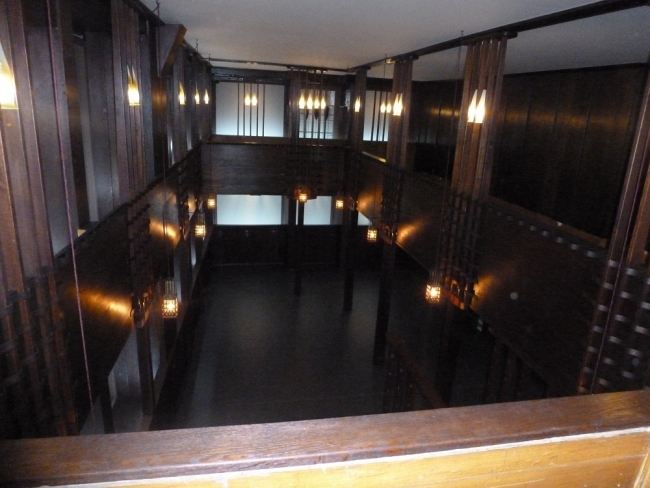
Experts in Scotland have painstakingly conserved and reassembled the Oak Room, one of Scotland’s most important interiors, after being stored in hundreds of pieces for almost 50 years by Glasgow City Council. The project has revealed Mackintosh’s original 1907 tearoom design in warm dark-stained oak and richly coloured glass.
The Oak Room is displayed at the heart of V&A Dundee’s Scottish Design Galleries, a permanent display showcasing the significance and relevance of design with a particular focus on Scottish achievement.

V&A Dundee and Dundee City Council have been working in partnership with Glasgow Museums, who took the dis-assembled interior into Glasgow City Council’s museum collections after it was rescued from destruction in 1971. The scale of this collaborative £1.3 million conservation and restoration project required the expertise of architects, curators, conservators and craftsmen in order to research, reassemble and display this historic interior for generations to come.
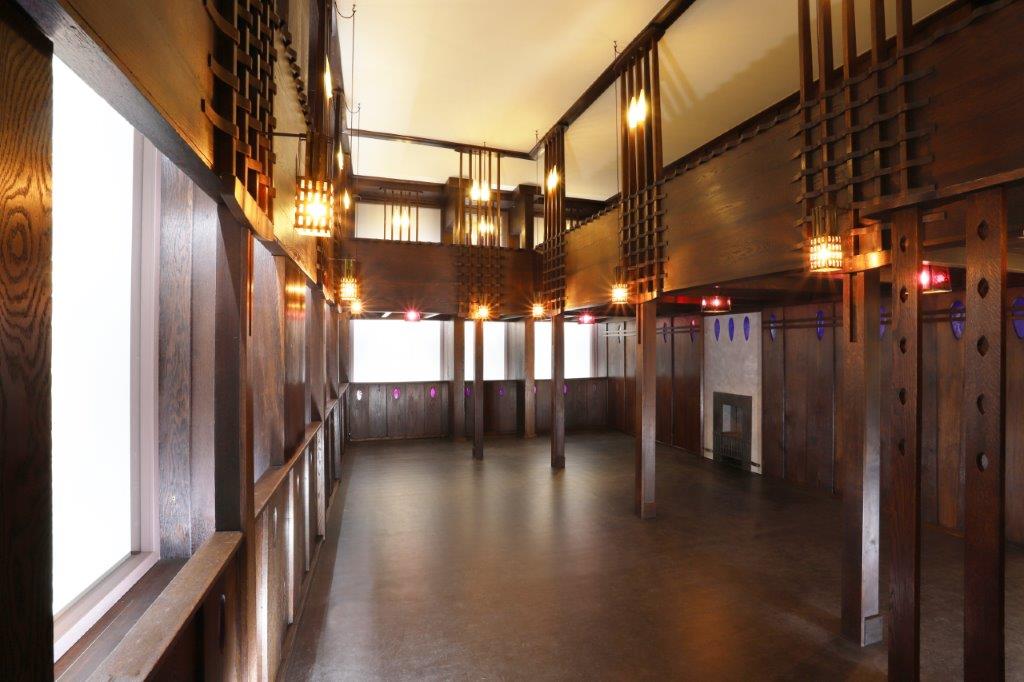
The Oak Room was the largest interior Charles Rennie Mackintosh designed for Miss Cranston’s Ingram Street Tearooms in Glasgow. The 13.5 metre (47 feet) long, double-height room, designed in 1907 and completed in 1908, is acknowledged as one of his key tearoom interiors. Mackintosh’s experimental ideas in the Oak Room informed his design for the Glasgow School of Art Library, which was completed a year later in 1909.
The team of specialists on the conservation and restoration project have worked to return the interior to its original design. Visitors will be able to walk into and around the room and experience Mackintosh’s brilliance at spatial arrangement and designing with light. The Oak Room will be unfurnished but illuminated with the electric light fittings Mackintosh originally intended.
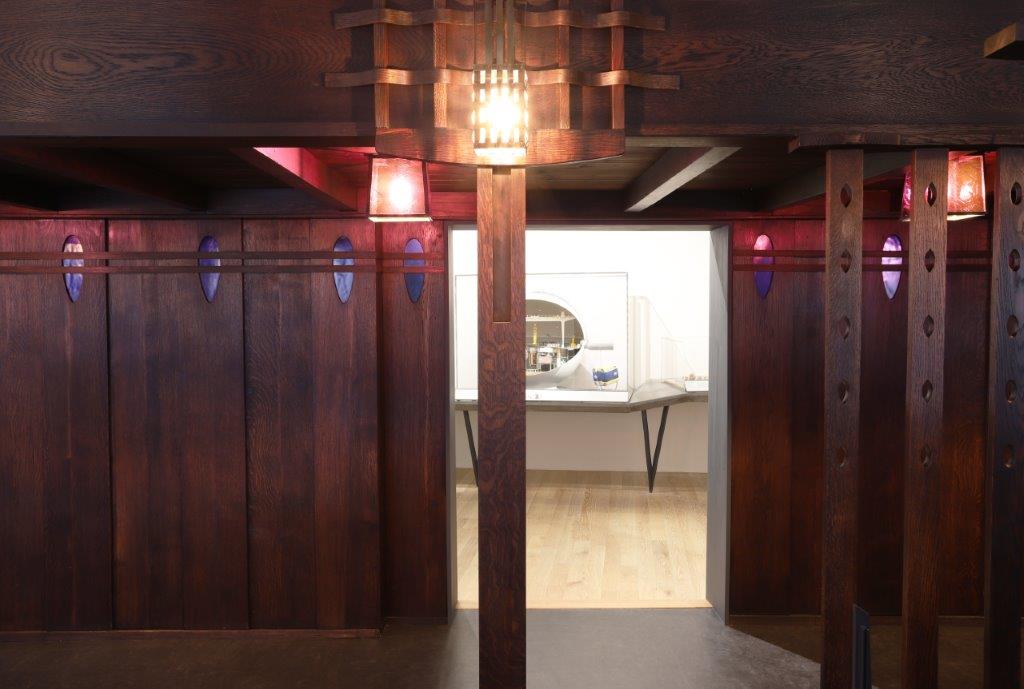
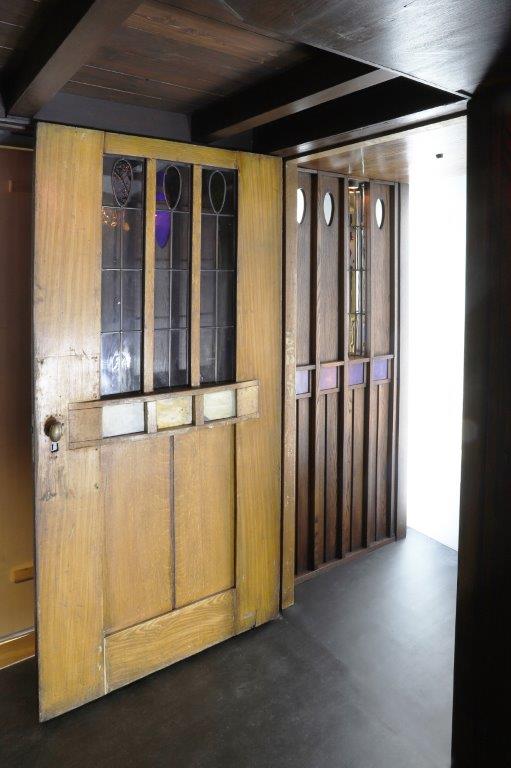
The essence of the interior is in the simplicity but sophistication of composition and sparing use of high-quality handmade materials such as the jewel-like pink/purple mouth-blown glass - that includes gold to achieve its colour – placed very specifically to maximum effect in the panelling and lampshades. While the interior design features high-quality details and craftsmanship, the majority of materials used to construct the interior were really quite ordinary and widely available at the time – Mackintosh’s genius was in how he brought them all together to create his total work of art.
Glasgow entrepreneur and businesswoman Catherine Cranston opened her first tearoom, The Crown Luncheon Room, on Argyle Street, in 1878. As the Temperance movement gained in prominence and wealthy women began to have some degree of independence, tearooms became hugely popular. Cranston employed Mackintosh for the first time in 1896 to design three stencilled-mural schemes for her new Buchanan Street Tearooms. This established a highly successful creative and commercial relationship spanning 21 years across all four of her Glasgow city-centre tearooms. Between 1900 and 1912 Mackintosh designed and oversaw the fitting out of eight major interior spaces plus ancillary rooms for her steadily growing Ingram Street Tearooms complex.
Following its completion for Miss Cranston’s Ingram Street Tearooms in 1908, the Oak Room had experienced several alterations and had been painted over with a faked wood-grain finish. It was last used as a tearoom in the early 1950s, thereafter, until 1971, it functioned as a shop. About 90% of the original Mackintosh interior survived, consisting mainly of oak panelling, coloured glass inserts and some light fittings. The majority of its furniture and furnishings had been lost over time.
When the tearoom interiors were removed from their original Ingram Street premises each room was numbered, each wall given a reference, and each piece of panelling coded sequentially. Plans and elevations of the most important rooms were drawn by Keppie Henderson architects to record how everything fitted together.
Between 2004-5, with the help of this information, Glasgow Museums quantified and documented all surviving Oak Room panelling - some 700 original parts. That earlier developmental stage, funded by the Scottish Government, helped inform this more recent project work to reassemble, conserve and restore this breath-taking interior, which had been lost to public view for generations.
This collaborative partnership to bring the Oak Room back to life began in 2013 with a lot of research and careful planning by Glasgow Museums, V&A Dundee and Dundee City Council, resulting in the appointment of a team of conservation and restoration specialists. In order to display the interior, the original footprint of the room had to be determined through the reassembly process. The conservation team have added frames and supports where outer buildings walls would previously have been used, as well as adding modern lighting and ventilation.
The team at Charles Taylor Woodwork, supported by Smith & Garratt project management, re-assembled the wooden panels and mezzanine floor in a workshop in Dalkeith near Edinburgh for assessment. Black and white photographs, drawings from the 1970s and an archive code in paint on the back of the panels helped the team piece the giant jigsaw back together and work out the method for final assembly and display. The complex process took 16 months to arrange a total of 2,000 individual parts including all the hidden supports replicating the building walls, floor and ceiling of its original location. The final installation at V&A Dundee was achieved without any modern structural interventions to the original wooden elements.
While the historic overpainting of the original panelling created a conservation challenge, it also revealed essential clues to how the interior fitted together, exposing key joins and overlaps in the wood. One of the key elements of the restored interior is the colour of the wood. The only original staining was revealed under a 1950s light switch, revealing a key trace of the final oak colour Mackintosh used in the scheme. This was recreated by a local Glasgow company after detailed analysis of the original wood and composition.
Rainbow Glass Studio in Ayrshire undertook specialist glass conservation. Their work revealed Mackintosh used eight different types and the highest quality glass available. In particular, the beautiful streaky pink/purple glass required gold to manufacture its effect. Using an original fragment from the room, experts in Germany at Lamberts Glass were able to replicate the original mouth-blown, purple glass. Though some glass inserts were damaged or missing, an impressive 80% of the original square and teardrop glass inserts in the wall panels have been retained.
Research undertaken for the restoration has revealed how exceptionally creative Mackintosh was with electric lighting in the Oak Room. His interior design incorporates three different lampshade designs, each placed with the intention of providing a specific quality of light and effect. Not all the original fittings survived. This display includes a mix of original and skilfully reproduced glass shades and brass lanterns. Only one original leaded-glass box-lantern partially survives in Glasgow’s collection, but it provided significant evidence which has allowed the team to accurately re-create high quality replica lampshades to complete the interior.
Philip Long, Director of V&A Dundee, said: “The project to conserve and restore an entire interior by Charles Rennie Mackintosh, unseen for nearly 50 years, has been one of the most exciting parts of creating V&A Dundee.
“As a designer, architect and artist, Mackintosh is of worldwide significance. He has been an inspiration to very many designers from the moment his work was first seen through to today, including the architect of V&A Dundee, Kengo Kuma.
“When we set about developing galleries for the new museum telling the story of Scotland’s design history, it was vital Mackintosh was represented in a major way. Now, with the aid of the Heritage Lottery Fund, Art Fund, the Scottish Government and others that has been made possible.”
Chair of Glasgow Life and Deputy Leader of Glasgow City Council, Councillor David McDonald, said: “The new Scottish Design Galleries at V&A Dundee was a unique opportunity to showcase and celebrate the incredible legacy and creative genius of Glasgow’s greatest cultural icon, Charles Rennie Mackintosh.
“The intricate conservation and restoration of the Oak Room has been an exciting collaboration between Glasgow Museums, V&A Dundee, Dundee City Council and an excellent team of specialists, conservators, restorers and craftspeople. Over three years the team pieced together a giant thirteen and a half metre long three-dimensional jigsaw, which has breathed new life into the largest interior of the Ingram Street Tearooms. The tearooms were dismantled in 1971 and transferred to Glasgow Museums’ collection who cared for them until this long-term loan enabled the Oak Room to be so beautifully restored.
“Mackintosh was meticulous, every single element had its place, so the finished interior was a complete work of art. We are in awe of the finished result, now on show to the world as the stunning new V&A Dundee opens. Visitors to the Oak Room can marvel at his exacting design and attention to detail, the more you look the more you see, that is his gift. It is incredibly important that we treasure and protect Mackintosh’s legacy to allow future generations the opportunity to experience his spaces, his ideas and his brilliance.”
The conservation and restoration of the Oak Room is a collaboration between Glasgow Museums, V&A Dundee and Dundee City Council. The project is made possible by a long-term loan from the collections of Glasgow City Council, and grant funding from the Heritage Lottery Fund, Art Fund, and private donors.
Image Gallery






Related News
Why all this fuss about the Oak Room?

The Opening of the New V&A, Dundee

Charles Rennie Mackintosh’s Restored Oak Room on Display in Dundee
More Case Studies
Smith & Garratt have acknowledged expertise with heritage property, regularly working on listed buildings and Scheduled Monuments. See some of our previous work.


Measured Surveys

Surveys of Non-Residential Buildings