
Our Window onto the World
The Smith & Garratt logo features a classical window with no indication whether the view is from within, from without, or whether it is a stand-alone monumental structure. It is representative of our work – which is generally traditional in nature and includes interior works, exterior works, and stand-alone or landmark tasks. We are known for our award-winning works to historic buildings; perhaps less well known are the works we undertake for clients at milestones in their lives – the rigorous survey of that special property, the planning consent that unlocks potential, strategic advice at a crossroads, an expert opinion in the hour of need.
Our window has a specific design. It consists of a central light with a semicircular arch carried on an entablature supported by pilasters enclosing two flanking lights – and is known as a ‘Palladian’, ‘Venetian’ or ‘Serlian’ window. The terms ‘Palladian’ and ‘Venetian’ relate to Andrea Palladio of Venice (1508-1580), the Renaissance architect whose Four Books of Architecture (1570) inspired some of the greatest neo-classical buildings in Europe and the United States. Modelled after classical Greek and Roman forms, such as the Baths of Diocletian, Palladio's buildings – including his famous Villas in the Veneto – featured arched openings. The form was first used in triumphal arches of ancient Rome and was adapted for windows by Donato Bromante (1444-1514) in his design for St Peter’s Basilica – executed by Michelangelo. It was described by Sebastiano Serlio (1475-1554) in his massive seven-book treatise entitled All the Works of Architecture and Perspective, which was written earlier than Palladio’s tome, so ‘Serlian’ is probably the more correct term.
Smith & Garratt have worked on buildings with these windows up and down the country, including Georgian examples at Marchmont in the Scottish Borders and an Edwardian example at the Merkinch Hall, Inverness.
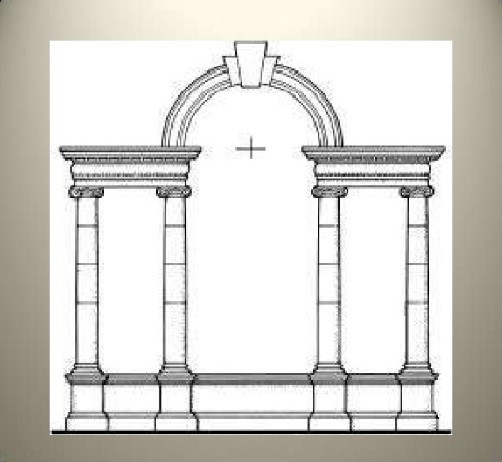
Illustration by Andrea Palladio, 1570.
Client Facing

Hugh Garratt LL.B FRICS FAAV
Double-qualified as a surveyor and in law, Hugh has followed an exceptional career path, never far from property development, historic buildings and heritage property.
Born in 1961 – in a C16 farmhouse, the second son of a dairy farmer – Hugh studied at the Royal Agricultural College at Cirencester, qualified as a surveyor and spent 20 years as a resident agent or factor. He held four commands: at Marston St Lawrence then Merevale & Blyth Estates in England, followed by Cawdor Castle and Luss Estates in Scotland, taking responsibility for the full range of estate buildings – from castles and country houses to cottages, model farms, mills, chapels, bridges and scheduled monuments – and driving residential, rural and commercial developments. In addition, he has specialist knowledge of parks and amenity woodland and an appreciation for the care of chattels.
Since 2003 – having obtained a law degree with honours at Newcastle – Hugh has co-directed a Borders-based surveying practice specialising in heritage work alongside planning and development and the delivery of private-client and expert witness services. The growing practice is renowned for its work in the planning and development of numerous historic buildings – involving design, procurement, project management, financial control, construction, and Health & Safety. Its reputation rests on its bespoke service and track record in delivering award-winning quality on time and on budget. Clients include private individuals, development companies, government contractors, local authorities, the Church of Scotland, Historic England, community bodies and the HLF.
The firm’s awards include Scottish Borders Council’s Special Award for Conservation and Design 2016 and the Georgian Group Architectural Award for Finest Restoration of a Georgian Interior 2017. Hugh designed and delivered the restoration of Marchmont House – winner of the Historic Houses / Sotheby’s Restoration of the Year 2018; and managed the restoration and delivery of Charles Rennie Mackintosh’s Oak Room to the new V&A at Dundee. In recognition of his understanding of heritage property and the quality of services delivered, Hugh is an RICS Certified Historic Buildings Professional and an assessor for the Heritage Lottery Fund.
Hugh is a trustee at Eyemouth Harbour and a regular public speaker for LPOC and the RICS. He lives a rural life in the Scottish Borders with his wife and two children, where they keep a few livestock and grow much of their own food.


